



About William “Bill” McIlwain
Born in Belfast, Northern Ireland, on 20 May 1957, William McIlwain emigrated to Australia with his parents, four brothers and one sister in 1961. The family settled in Boronia, a suburb of Melbourne nestled at the foot of the Dandenong Ranges.
His formal education ended at the age of 16 when, following the sudden death of his father, his elder brothers took him out of school and into the workforce to help support his mother. What followed was a succession of jobs—far too many to mention—but life took a fortunate turn in 1977 when he met the love of his life, Karen, at the Village Green Hotel. They married in 1980 and remain together to this day.
Together, they raised two children, their daughter Janine and son Andrew, to whom the dedication in his book is devoted.
When Janine and Andrew had grown up, the couple sold their home and embarked on a seven-year adventure travelling around Australia. Towing their 1987 Roadstar caravan, they followed the harvest trail, experiencing life on the road and discovering many parts of the country along the way.
It was during this journey that Bill began writing The Last Seeker. The idea was inspired, in part, by the war in Iraq and by the thought of an outsider from another world observing humanity and attempting to understand who—and what—we are.
The Last Seeker is a historical novel featuring its central character, Quincey Jacobs, against the backdrop of two of history’s defining events: the sinking of the Titanic and the First World War. Both events play prominent roles in the story.
The research undertaken for the novel gave Bill a deeper understanding of human behaviour, particularly the differences between those who hold power and those who do not. That exploration has inspired him to continue Quincey Jacobs’ story, with a sequel embracing the years leading up to the Second World War.
The Last Seeker
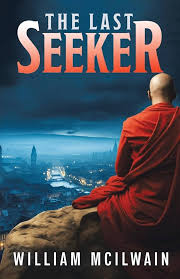
Imagine yourself as an observer from another planet, sent to Earth to explore, take in the good and the bad and report back. Quincy Jacobs, for that was the name his elders on Anavrin gave him, had that duty.
Setting foot in Panama in 1911, Quincy gets handed the reins from his predecessor, Hans Kuffer, and finds out that a Seeker can see a lot, and leave a lot of baggage.
In book one, Quincy has to deal with the Titanic, and newly formed acquaintances that are to embark on the perilous journey. As a journalist, working freelance at the Times in London, Quincy covers WWI from a different perspective.
France looms large on the horizon, and his encounter with Simone Sonnet and WWI. Simone, whose father’s ancestors have accommodated the Seekers on their vineyard in Pau for centuries, does not have a soft spot for them. Her ice-blue eyes are testament to dalliances between Seekers and the ancestors.
Simone and Quincy travel to Paris, staying in the Latin Quarter amongst a myriad of cultures and ideas. Simone falls for a young American poet named Alan Seeger, but the war is not to be to kind to their relationship.
Back in England, Quincy has to confront his original misguided opinion of humanity. The war has shown a dark side to humans that he was not prepared for. Enter Clara Mondale to put a positive spin on the good of humanity and what it has to offer.